Article Overview: WMS implementation success is low, at just 24%. Failures seldom result from mature software, but from poor client-side execution, governance, and internal bandwidth. Critical workstreams like testing, training, and change management are the client’s responsibility, a realization often made too late. To address execution risks early, implementation readiness should run parallel to a WMS selection project, not follow it.
Implementation Success Begins in the WMS Selection Process
I’ve spent almost 30 years watching companies pour millions into WMS initiatives. Most of them don’t fail at go-live. They’re already off-track during selection. It just takes a few months for it to show up.
That distinction matters more than most teams realize. And it explains a number that hasn’t moved in years.
What is the success rate of WMS implementations?
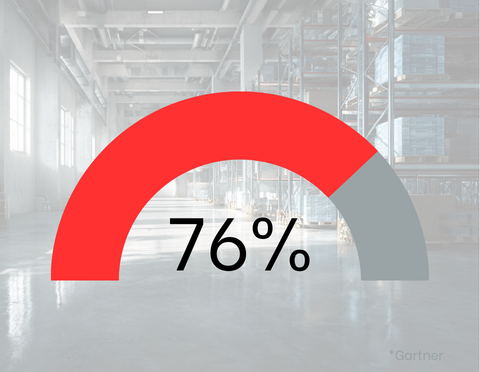
Gartner puts the full success rate of WMS implementations at 24%. So if most risk lives in the execution phase, why do we spend almost all of our time evaluating software and almost none preparing to execute it?
Six to nine months exhaustively evaluating warehouse management platforms. Thirty days preparing to implement.
That imbalance explains a lot on the success and failure of WMS projects.
Where do WMS implementations typically break down?
Today’s leading platforms are mature. They’ve been implemented hundreds of times across industries and operating models. When programs run over budget, miss timelines, or fall short on ROI, and most do, the software is rarely the reason.
The breakdown almost always happens somewhere else. Governance and decision rights. Integration ownership. Internal bandwidth. Change management. The organizations that get this right treat those as real workstreams from the beginning. Most don’t. And most don’t fail at go-live. They fail months earlier. They just don’t know it yet.
Which workstreams are client-owned in a WMS implementation?
Here’s the piece that catches organizations off guard more often than it should.
In a typical WMS implementation, the vendor owns a defined set of technical deliverables. But the most critical workstreams sit with the client: testing, training, change management, program governance, and day-to-day implementation leadership.
Not shared. Not co-led.
How can execution risk be reduced in a WMS implementation?
For many teams, that realization of client-owned responsibilities comes too late in the process. It’s often an “aha” moment when they finally see what they actually own in the vendor’s RACI matrix. Most assume the vendor is driving the majority of the implementation. In reality, the most critical pieces sit on the client side.
That’s not a flaw in the model. It’s just how these programs are structured. But if you sign a contract without understanding that reality, you’re carrying execution risk you probably can’t see yet. And by the time you can see it, it’s expensive.
Who should be on the internal team for a WMS project?
Leadership often tries to layer a WMS project on top of people’s existing jobs. That almost never works.
The people who need to own this are the ones who actually understand how your operation runs. The ones you can least afford to pull out of the business. If moving them onto the project team doesn’t create some pain in your day-to-day operation, you’ve probably picked the wrong people.
There’s also a mindset shift most teams underestimate. You’re asking a warehouse organization to stop focusing on today’s shipments and start designing next year’s processes. That’s not a training issue. It’s a context shift. And it doesn’t happen quickly.
Is a 30-day planning process enough for WMS implementation readiness?
Think about how football teams approach a season. Games aren’t won on Sundays. They’re won in the offseason, during film study, conditioning, and preparation that happens long before kickoff. Front offices spend months figuring out who’s starting, who’s backing them up, where they’re thin, and where they can’t afford to get it wrong. The GM isn’t just picking good players. He’s trying to get the right players in the right roles, because he knows the outcome is shaped long before the first snap.
A team that waits until preseason to figure that out doesn’t get a grace period. They just lose.
The same dynamic plays out here. The thirty days between contract signature and kickoff carry more weight than most teams expect. Before kickoff, decisions are still flexible. After kickoff, they harden. Every gap you didn’t anticipate turns into a project change order, and those show up fast in both schedule and cost.
Should WMS implementation planning run parallel to the selection process?
WMS selection is a real decision. It deserves real discipline. This is often a 10-year commitment, and it should be treated like one.
But the system selection does one thing: it defines capability. Implementation determines outcome.
If you’re starting a WMS selection project right now, the question isn’t just which platform is the right fit. It’s whether you’re building the internal readiness to carry it while you’re still evaluating technology, not after.
Most firms don’t work that way. Selection is a phase. Implementation readiness is the next phase. You finish one, then you start the other. By the time you get there, you’re already behind and you’ve made commitments on timeline, team, and scope that are hard to unwind.
What are best practices for WMS selection
What are best practices for WMS selection?
At Alpine Supply Chain, the WMS selection process works differently. WMS implementation readiness isn’t a follow-on engagement, it runs alongside selection from the start. That means by the time contracts are signed, the execution risks are already on the table, not surfacing for the first time in week three of kickoff.
In practice that means working through the factors that actually determine whether a program succeeds or stalls. Executive sponsorship and whether it’s real or ceremonial. Internal bandwidth and whether the right people can actually be freed up. Integration complexity, data quality, change management maturity, testing readiness, and project governance. And your team’s prior WMS implementation experience, because that shapes everything about how the program needs to be structured. What comes out the other side isn’t a report. It’s a gap assessment and a working plan to address the highest-risk areas before implementation starts.
This is the work that moves the needle on that 24% number. Not dramatically better software. Not a more detailed RFP. The discipline to treat execution as a parallel track, not a reward for finishing selection.
Mike Abarelli is a Senior Director at Alpine Supply Chain Solutions with 25 years of experience across every side of the WMS industry, including vendor, client, and independent consultant. He knows what it takes to help executive teams make the right WMS decision the first time.